

Landscape Renovation Ideas That Make a Difference
The best landscape renovation ideas solve a real problem while making the property more enjoyable. Start with a site assessment, then prioritize drainage and grading, improve the layout, refresh overgrown or failing plantings, right-size the lawn, add a patio or walkway where it will be used, and finish with lighting and a maintenance plan. A phased design-build approach can turn a dated or disconnected yard into a cohesive outdoor space without requiring every feature to be rebuilt at once.
If your property needs more than a seasonal cleanup, contact Borst Landscape & Design at (201) 785-9400 to schedule a consultation.
What Is Landscape Renovation?
Landscape renovation is the process of improving an existing outdoor space rather than starting with a blank property. It may involve selective removal, new planting beds, lawn renovation, drainage, grading, hardscape replacement, outdoor living features, lighting, or a combination of these elements.
Renovation is different from simply adding a few plants. The most successful projects look at how the entire property works: how people arrive, where water moves, what areas are used, what has become too large, and how the landscape should look across the seasons.
1. Start with a Property and Drainage Assessment
Before choosing plants or materials, identify the conditions that are limiting the landscape. Look for:
- Standing water or erosion after rain.
- Downspouts that discharge toward the home or walkways.
- Compacted soil and poor infiltration.
- Slopes that make mowing or movement difficult.
- Tree roots, shade, and areas where grass consistently fails.
- Aging walls, steps, patios, or walkways.
- Views that need privacy or screening.
Drainage and grading often belong at the beginning of the renovation sequence. New plantings and hardscape cannot correct a water problem that was never addressed below the surface.
2. Rework the Layout Around How You Live
A yard can be healthy and still feel unusable if its spaces are disconnected. Think about the activities you want to support: morning coffee, outdoor dining, family play, pool use, gardening, entertaining, or quiet time.
A renovation can create zones for:
- Dining close to the kitchen.
- A lounge area with shade and privacy.
- A fire pit or outdoor fireplace for cool evenings.
- A lawn area for play and open views.
- Garden beds that frame the home and paths.
- A poolside or outdoor kitchen area.
Walkways should connect these spaces naturally rather than ending in isolated corners. A clear layout makes the property feel larger and more comfortable to use.
3. Replace Overgrown Plantings with Layered Design
Mature landscapes often become crowded as shrubs outgrow their original spacing. Removing everything may be unnecessary; selective renovation can preserve valuable trees and established structure while opening room for new layers.
Use a mix of:
- Canopy and understory trees.
- Evergreen and deciduous shrubs.
- Perennials with varied bloom times.
- Ornamental grasses for movement and winter structure.
- Ground covers beneath trees or on difficult slopes.
- Native plants selected for the actual site conditions.
A layered planting plan gives the property interest at different heights and seasons. It can also improve privacy, soften hardscape, and reduce the visual gaps that make a landscape feel unfinished.
4. Right-Size the Lawn
Large areas of turf can be attractive, but they should earn their place. If a lawn is rarely used, too shaded to thrive, too steep to mow, or consistently damaged by runoff, consider a different treatment.
Replace low-value turf with planting beds, meadow-like native compositions, woodland ground covers, or a defined patio and walkway. Keep open lawn where it supports the way your family uses the property.
If the lawn is worth keeping but looks thin, diagnose the cause before reseeding. Rutgers’ lawn renovation guidance points to drainage, compaction, shade, species selection, soil pH, mowing, watering, thatch, insects, and disease as possible causes of poor performance.
5. Add or Redesign a Patio for Outdoor Living
A patio can turn an underused backyard into an outdoor room, but its placement and scale matter. Choose the location based on the home’s doors, sun and shade, views, drainage, and the furniture or activities it needs to hold.
Possible renovation directions include:
- A natural-stone dining terrace.
- A paver lounge area connected to the kitchen.
- A poolside patio with safer circulation.
- A fire-pit terrace for shoulder-season use.
- A multi-level solution for a sloped yard.
- Built-in seating walls that define the space.
Borst’s landscape design services can coordinate the patio with walkways, planting beds, walls, water features, outdoor kitchens, and lighting.
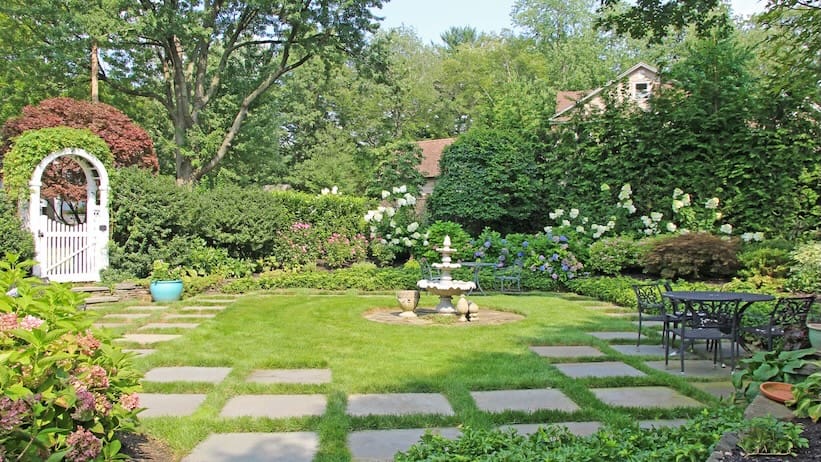
6. Improve Walkways, Steps, and Entry Sequences
A walkway is both a practical route and a design element. If the existing path is cracked, too narrow, poorly lit, or awkwardly placed, it can make the entire property feel dated.
Renovation options include:
- Widening a main approach for easier movement.
- Replacing a failing surface with stone or pavers.
- Adding steps and low walls to manage a slope.
- Connecting the driveway to the front door more clearly.
- Creating a garden path through planting beds.
- Adding lighting for nighttime safety and orientation.
Use durable materials and plan transitions carefully. A walkway should move people where they need to go without forcing them through a planting bed or across a wet area.
7. Solve Privacy and Screening Problems with Planting
Privacy is often one of the reasons homeowners renovate a landscape. A single tall hedge may not be the best answer, particularly when it outgrows its space or creates a wall of one species.
Consider layered screening with evergreen and deciduous plants, ornamental trees, fences, trellises, or a combination. The design should account for mature size, views from inside the home, seasonal appearance, utility lines, and the amount of pruning you want to do.
The result should screen the needed view without making the yard feel closed in.
8. Build in Sustainable Features
A renovation is a chance to improve environmental performance instead of repeating the old layout. Sustainable upgrades can include:
- Native plants matched to light and moisture.
- Rain gardens or planted swales where appropriate.
- Permeable pavers for selected patios and paths.
- Larger planting beds beneath mature trees.
- Drip irrigation and efficient watering zones.
- Compost and organic matter to improve soil.
- Mulch that conserves moisture without touching trunks.
- Organic lawn and targeted pest-care practices.
These features should be designed around the site. A rain garden needs appropriate infiltration and overflow; permeable paving needs a properly prepared base; and native plants still need the right growing conditions.
9. Add Lighting to Extend the Renovation After Dark
Landscape lighting can make renovated spaces more usable and can reveal the structure of the property at night. Use it to guide paths, illuminate steps, highlight mature trees or walls, and make dining or seating areas more comfortable.
A restrained lighting plan is usually more effective than placing bright fixtures everywhere. Integrate lighting during design so conduit, fixtures, and planting do not have to be retrofitted later.
10. Phase the Project with a Long-Term Plan
You do not have to complete every idea in one season. A phased plan can prioritize the work that protects the property and creates the most immediate benefit.
A practical sequence might be:
- Site assessment, design, drainage, and grading.
- Structural hardscape, steps, walls, and primary paths.
- Patio, outdoor kitchen, fire feature, or other living space.
- Trees, shrubs, garden beds, and privacy planting.
- Lawn renovation, ground covers, and smaller perennials.
- Lighting, irrigation adjustments, and finishing details.
- Ongoing maintenance and seasonal refinement.
Phasing should not mean designing each piece in isolation. A master plan keeps the colors, materials, grades, sightlines, and future access consistent.
How Do You Know It Is Time to Renovate?
Your landscape may be ready for renovation if it feels difficult to use, requires constant pruning, has recurring drainage problems, contains failing hardscape, or no longer fits your family’s lifestyle. It may also be time for a broader plan when individual fixes have created a patchwork of materials and plantings.
A professional consultation can help distinguish what should be preserved, repaired, removed, or redesigned.
Turn a Dated Yard into a Cohesive Outdoor Space
The most useful landscape renovation ideas are not trends added for their own sake. They are decisions that improve movement, drainage, beauty, function, and long-term care. With a clear plan, an existing New Jersey property can become an outdoor space that feels intentional from the front walk to the backyard.
Borst Landscape & Design offers design-build, garden design, hardscape installation, organic lawn care, and landscape maintenance for Northern New Jersey homeowners. Contact Borst Landscape & Design or call (201) 785-9400 to begin your renovation plan.
FAQ: Landscape Renovation Ideas
What is the first step in a landscape renovation?
Start with a property assessment that reviews drainage, grading, soil, sun, existing plants, hardscape, access, and how you want to use the space. This prevents new work from hiding an underlying problem.
Can I renovate my landscape in phases?
Yes. A master plan can divide work into phases, such as drainage and grading first, structural hardscape next, then planting, lawn, lighting, and maintenance. Phasing can make a large project more manageable while preserving a cohesive result.
How do I update an overgrown landscape?
Preserve healthy mature trees and valuable features where possible, then selectively remove overcrowded plants, correct bed shapes, improve sightlines, and add layered plants suited to the site.
What landscape renovations add the most function?
Patios, walkways, steps, outdoor kitchens, fire features, lighting, privacy planting, and drainage improvements can all add function. The right combination depends on the property and how you use it.
How long does a landscape renovation take?
Timelines vary by scope, permitting, materials, weather, access, and whether the project includes grading, drainage, masonry, patios, planting, or lighting. A design-build team should provide a project schedule and explain dependencies.
Research notes: Guidance checked against Rutgers NJAES resources on lawn renovation, native residential landscapes, rain gardens, soil, and water management. Final planting and construction recommendations require a site-specific design.

Karl Wahlberg Jr., Senior Account Manager at Borst Landscape & Design, specializes in landscape management and seasonal care for Northern New Jersey homes. With extensive experience and industry recognition, he brings practical expertise and personal passion to every project, helping clients elevate their outdoor spaces.