
TL;DR: Is Fall a Good Time to Plant Trees?
Yes. Planting trees in fall is one of the best ways to give a new tree a strong start in New Jersey. Cooler air reduces stress on leaves and branches, while soil stays warm enough for roots to keep growing well after the leaves drop. In Northern New Jersey, the best window is usually mid-September through early November, or until the ground begins to freeze. Plant at the correct depth, water deeply and consistently until the ground freezes, and add a thin ring of mulch—never piled against the trunk. A few species, such as oaks, birches, and magnolias, are often better planted in spring.
Thinking about adding shade, privacy, or seasonal color before winter? Contact Borst Landscape & Design at (201) 785-9400 to plan your tree planting.
Why Planting Trees in Fall Works So Well
A newly planted tree spends its first year or two rebuilding the roots it lost in the nursery and during transplanting. Fall gives it a head start on that work.
Warm soil, cool air. Soil holds summer warmth well into autumn, so roots continue to grow even as air temperatures drop. Meanwhile, cooler days and shorter daylight mean the tree loses less water through its leaves.
More reliable moisture. Fall rainfall and lower evaporation make it easier to keep the root zone evenly moist than during a hot New Jersey July.
A full season of root growth before summer. A tree planted in October has roots growing in fall and again in early spring, so it faces its first summer heat with a more established root system than a tree planted in May.
Less stress for you, too. Fall-planted trees generally need less frequent watering than summer plantings, and nurseries often have good stock available after the summer rush.
When to Plant Trees in Fall in New Jersey
In Bergen County and the rest of Northern New Jersey, aim to plant from mid-September through early November. The goal is to give roots several weeks of growth before the soil freezes. A useful rule of thumb is to plant at least four to six weeks before the ground freezes hard.
Timing can shift with the weather. A warm fall extends the window; an early cold snap shortens it. Container-grown and balled-and-burlapped trees can typically be planted until the ground is no longer workable, provided they can be watered in well.
Trees That Usually Do Better in Spring
Some trees establish more slowly or are more sensitive to fall transplanting. These are often better planted in spring:
- Oaks (especially red oaks) and some other thick-rooted species
- Birches
- Magnolias and tulip trees
- Dogwoods (often fine in fall but can be finicky)
- Many broadleaf evergreens in exposed, windy sites
Evergreens such as spruces, pines, and arborvitae can be planted in early fall, but give them extra time—ideally by mid-October—because they keep losing moisture through their needles all winter.
Choosing the Right Tree for Your Yard
The best tree is the right species in the right place. Before planting, consider:
- Mature size. Check the full height and spread so the tree won’t crowd your home, power lines, driveway, or neighbors’ property in 15 years.
- Sun and soil. Match the tree to the light and drainage on site. Many Northern New Jersey yards have clay-heavy or compacted soil that holds water.
- Purpose. Shade, privacy screening, spring flowers, fall color, or wildlife value all point to different species.
- Deer pressure. Deer browsing is a real concern in much of Bergen County. Choose resistant species or plan protection for young trees.
- Native options. Native trees such as red maple, serviceberry, river birch (spring planting preferred), and eastern redbud support local pollinators and birds.
Rutgers Cooperative Extension offers helpful guidance on selecting and planting landscape trees for New Jersey conditions. For trees that fit a larger plan, Borst’s landscape design services can help you place them alongside patios, beds, and screening plantings.
 How to Plant a Tree in Fall: Step by Step
 How to Plant a Tree in Fall: Step by Step
1. Call Before You Dig
In New Jersey, contact New Jersey One Call (811) a few business days before digging so underground utilities can be marked.
2. Find the Root Flare
The root flare is where the trunk widens at the base. On many nursery trees, it’s buried under extra soil in the container or root ball. Gently remove soil until you see it. The flare should sit at or slightly above finished grade after planting.
3. Dig Wide, Not Deep
Dig a hole two to three times as wide as the root ball but no deeper than the distance from the bottom of the root ball to the root flare. Roughen the sides of the hole so roots can move into the surrounding soil. Planting too deep is one of the most common reasons new trees struggle.
4. Prepare the Root Ball
- Container trees: Loosen or cut circling roots so they grow outward.
- Balled-and-burlapped trees: Once the tree is in position, remove twine and wire baskets from the top portion and pull back or cut away as much burlap as practical, especially synthetic burlap.
5. Backfill With Native Soil
Fill the hole with the soil you removed. Heavy amendments can create a “pot” effect where roots stay in the rich backfill instead of spreading out. Lightly firm the soil to remove air pockets, and water as you go.
6. Water Deeply
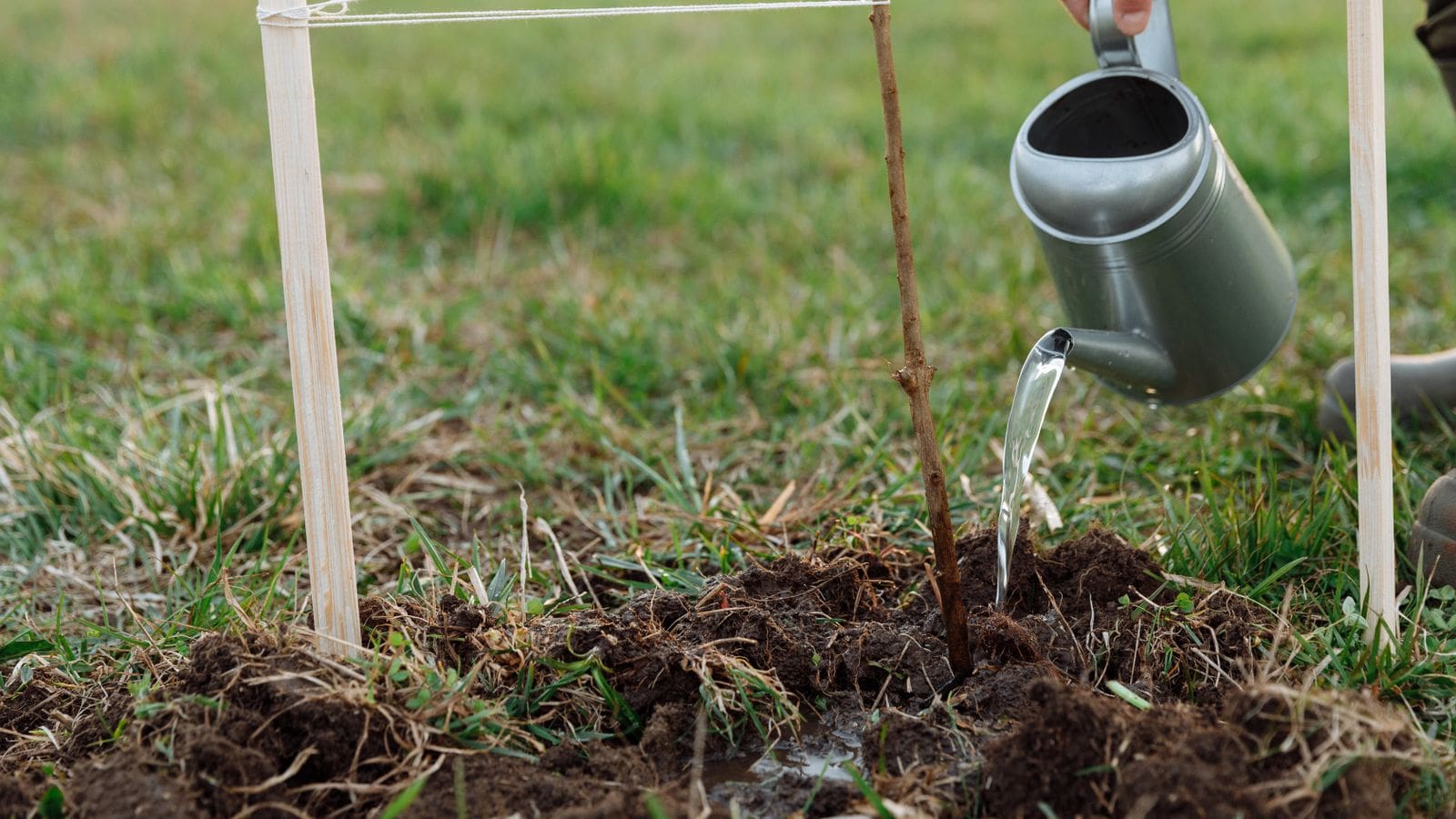
Soak the root ball and surrounding soil immediately after planting. Then water deeply about once a week—more often during dry, windy stretches—until the ground freezes.
7. Mulch Correctly
Spread 2 to 3 inches of shredded bark or wood mulch in a wide ring, keeping it a few inches away from the trunk. Avoid “mulch volcanoes,” which hold moisture against the bark and invite decay and pests.
8. Stake Only If Needed
Most trees don’t need staking. If a tree is in a very windy location or has a large canopy relative to its roots, use loose, flexible ties and remove the stakes after one growing season.
Caring for a Fall-Planted Tree Through Winter and Spring
- Keep watering until freeze-up. Consistent moisture is the biggest factor in fall planting success.
- Skip fertilizer at planting. Focus on root establishment; a soil test can guide feeding later.
- Hold off on pruning. Remove only broken or damaged branches during the first year.
- Protect from deer and rodents. Trunk guards and fencing can prevent browsing and winter bark damage.
- Resume watering in spring. During the first one to two growing seasons, water deeply during dry periods.
Ongoing tree and shrub care can help young trees stay healthy as they establish. For more on seasonal timing, see our article on why fall is the best time to plant trees.
Give Your New Trees a Strong Start This Fall
Planting trees in fall takes advantage of warm soil and cool air, giving roots time to establish before next summer’s heat. Choose a species suited to your site, plant at the right depth, water consistently until the ground freezes, and mulch correctly. With good planning, a tree planted this autumn can provide shade, privacy, and beauty for decades.
At Borst Landscape & Design, our team helps Northern New Jersey homeowners select, place, and care for trees as part of a well-designed landscape. Contact Borst Landscape & Design or call (201) 785-9400 to get started.
FAQ: Planting Trees in Fall
Is it better to plant trees in fall or spring?
For many deciduous trees in New Jersey, fall is ideal because warm soil supports root growth while cool air reduces stress. Spring is better for slower-establishing species such as oaks, birches, and magnolias.
How late can you plant trees in fall in New Jersey?
In Northern New Jersey, most trees can be planted through early November, or until the ground freezes. Aim to plant at least four to six weeks before a hard freeze so roots can begin to establish.
How often should I water a newly planted tree in fall?
Water deeply right after planting, then about once a week until the ground freezes. Increase watering during dry or windy weeks, and check that the root ball—not just the surface—stays moist.
Should I fertilize a tree when I plant it in fall?
Generally, no. Newly planted trees need to focus on root growth, and fertilizer at planting isn’t usually necessary. A soil test can show whether nutrients are needed later.
Can I plant evergreen trees in the fall?
Yes, but plant them earlier in the season, ideally by mid-October. Evergreens lose moisture through their needles all winter, so they need time to establish roots and should be watered well until the ground freezes.
Research notes: Planting guidance aligned with Rutgers NJAES and ISA tree planting recommendations (root flare depth, wide hole, native backfill, mulch rings, minimal staking). Species timing is general; site-specific advice should come from a professional.
Photo by Thirdman

Karl Wahlberg Jr., Senior Account Manager at Borst Landscape & Design, specializes in landscape management and seasonal care for Northern New Jersey homes. With extensive experience and industry recognition, he brings practical expertise and personal passion to every project, helping clients elevate their outdoor spaces.