
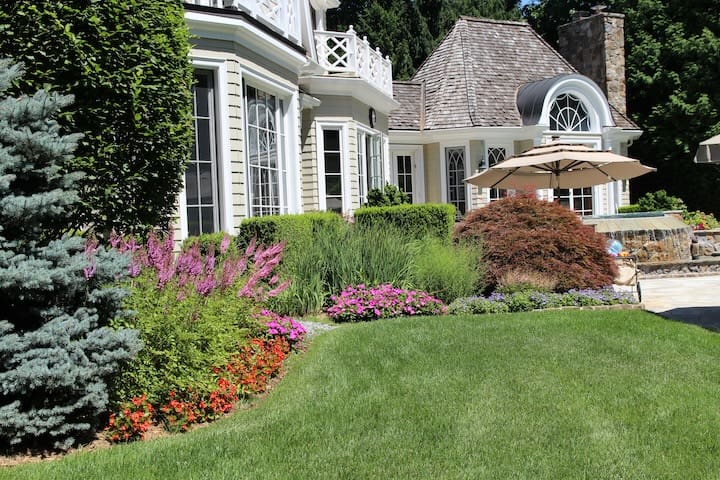
TL;DR: New Jersey summers are no joke — Zone 6b brings heat, humidity, and stretches without rain that test even established plants. The good news is that the right plant choices make a yard nearly self-sufficient through the worst of it. This post covers the best heat tolerant plants for New Jersey landscapes, from sun-loving perennials like Black-eyed Susan and Coneflower to low-maintenance trees, shrubs, and groundcovers. We also cover planting, mulching, and watering tips that give every plant its best chance.
At Borst Landscape & Design, our expert team can help you choose and install plants that look great and hold up through any New Jersey summer. Call (201) 254-5740 or contact us online to get started.
Choosing Heat Tolerant Plants for New Jersey Landscapes Starts with Your Climate
Bergen, Morris, and Essex County fall in USDA Hardiness Zone 6b — cold winters, yes, but it’s the summer that tests your landscape hardest. Choosing heat tolerant plants for New Jersey landscapes means selecting species that handle stretches of 90-plus-degree heat, high humidity, and inconsistent rainfall without dropping their leaves or giving up entirely.
Picking the right plants means choosing species that thrive rather than just survive in those conditions. The good news: there are beautiful options for every spot in your yard, from full-blazing sun to deep shade under a mature canopy.
Here at Borst Landscape & Design, our expert team helps Bergen County homeowners design and plant landscapes that look their best through every season. Call us at (201) 254-5740 or contact us online to talk about the right plants for your yard.
Best Heat Tolerant Plants for Full Sun in New Jersey
South- and west-facing beds, open lawns, and areas near pavement or walls absorb the most heat. These plants love it:
Perennials and ornamentals:
- Black-eyed Susan (Rudbeckia hirta) — a New Jersey native that blooms from mid-summer to fall with almost no care. Drought-tolerant once established and loved by pollinators. For a comprehensive list of native and adapted plants for New Jersey, Rutgers Cooperative Extension maintains reliable regional plant guides.
- Purple Coneflower (Echinacea purpurea) — another native perennial that handles heat and dry spells well. Deadhead spent blooms to extend the season, or leave seed heads for birds.
- Catmint (Nepeta) — silvery foliage, lavender-blue flowers, and exceptional drought tolerance. Blooms repeat after shearing. Child- and pet-safe.
- Ornamental Grasses (Karl Foerster, Little Bluestem, Switchgrass) — architectural plants that move beautifully in the breeze, need almost no water once established, and add year-round structure.
- Salvia (Salvia nemorosa) — long-blooming, heat-resistant spikes of purple or blue that attract pollinators and resist deer browsing.
Shrubs:
- Knockout Rose — the most popular landscape rose in the country for good reason. It blooms continuously from late spring through frost, resists disease, and handles New Jersey summers without fuss.
- Butterfly Bush (Buddleia) — fast-growing, heavily fragrant, and covered in pollinators all summer. Thrives in poor, dry soil.
- Potentilla — compact and reliable with cheerful yellow or white blooms from spring through fall. Tolerates heat, drought, and poor soil equally well.
Heat Tolerant Choices for Part-Shade Areas
Part-shade areas get three to six hours of direct sun each day — often morning sun with afternoon shade, or dappled light under a loose canopy. These conditions are actually ideal for many plants that would scorch in full afternoon sun:
- Astilbe — feathery plumes in pink, red, or white that perform beautifully in heat as long as moisture is consistent. Mulch the roots well.
- Coral Bells (Heuchera) — grown primarily for their stunning foliage in colors from caramel to deep burgundy. Tough, long-lived, and very low maintenance once established.
- Hostas — the workhorse of the part-shade garden. Varieties like Sum and Substance and Halcyon handle heat well when planted with adequate moisture and a protective mulch layer.
- Bleeding Heart (Lamprocapnos) — blooms in spring, then goes dormant in summer heat. Pair with hostas or ferns to fill the gap.
- Joe Pye Weed (Eutrochium purpureum) — a towering native perennial for part-shade that handles heat and humidity like a champ. Attracts butterflies in late summer.
Ground-Level Solutions: Heat Tolerant Groundcovers for New Jersey Yards
Groundcovers solve two problems at once: they suppress weeds and they stabilize soil moisture under tree canopies and in areas that are difficult to mow. The best heat tolerant groundcovers for New Jersey landscapes include:
- Liriope (Lily Turf) — the go-to groundcover for hot, dry spots, including the tree-root zones where nothing else grows. Muscari varieties stay tidy; spreading varieties fill in quickly.
- Pachysandra — dense, evergreen, and nearly indestructible in the shade of established deciduous trees. Holds slopes and eliminates bare soil beneath.
- Creeping Phlox (Phlox subulata) — explodes with color in spring, then holds as a mat of green through summer heat. Perfect for rock walls and sun-baked slopes.
- Sedum (Stonecrop) — virtually indestructible in full sun and dry conditions. Low-growing varieties like Angelina or Dragon’s Blood hug the ground and add season-long color.
- Wild Ginger (Asarum canadense) — a native option for deep, dry shade where almost nothing else will grow. Slow to spread but very reliable once established.
Heat Tolerant Trees and Shrubs That Anchor a New Jersey Landscape
Trees and large shrubs set the structure of your landscape — and they need to be tough enough to anchor it through decades of New Jersey summers. These selections have strong track records in Bergen and Morris County:
Trees:
- River Birch (Betula nigra) — one of the best trees for New Jersey landscapes. It handles both summer heat and the poorly drained soils common in our area. The exfoliating bark adds year-round interest.
- Crape Myrtle (Lagerstroemia) — increasingly reliable in Zone 6b with improved cold-hardy varieties like Natchez and Sioux. Showy summer blooms, attractive peeling bark, and genuine drought tolerance.
- American Sweetgum (Liquidambar styraciflua) — a native that tolerates heat, wet soil, and drought with equal ease. Spectacular fall color in the bargain.
- Red Maple (Acer rubrum) — widely adaptable, heat tolerant, and among the best trees for fall color in Northern New Jersey. Cultivars like October Glory and Red Sunset are especially reliable.
Shrubs:
- Inkberry Holly (Ilex glabra) — a native evergreen shrub that handles heat, moisture extremes, and salt spray. Provides winter structure and berries for birds.
- Spirea — incredibly tough, low-maintenance flowering shrubs. Double Play varieties bloom in spring and re-bloom in late summer with little attention.
- Viburnum — a large family of shrubs with excellent heat and drought tolerance once established. Many species are native to New Jersey and provide flowers, berries, and excellent fall color. Viburnums and other evergreen options are also among the top picks in our guide to privacy shrubs for New Jersey yards.
- Winterberry Holly (Ilex verticillata) — a native deciduous holly that puts on a brilliant show of red berries in fall and winter. Heat and wet soil tolerant; plant male and female together for berry production.
Planting Tips That Build Heat Tolerance from Day One
Even the most heat tolerant plants need a proper start. How and when you plant determines whether a new addition thrives or struggles in its first summer.
- Plant in fall or early spring whenever possible. Fall planting in Bergen County gives roots a chance to establish before summer heat arrives — it’s the single biggest factor in first-year success.
- Dig a hole two to three times wider than the root ball, but only as deep. Setting plants too deep is a leading cause of heat stress and root rot.
- Amend heavy clay soils with compost — not sand — to improve drainage and root penetration. New Jersey soils vary widely; a soil test takes the guesswork out of it.
- Water new plantings deeply at installation and continue weekly for the first full growing season, even for drought-tolerant species. Deep root watering encourages roots to follow moisture down into cooler soil — drought tolerance applies to established plants, not new ones.
- Group plants by water need. Placing drought-tolerant species next to thirsty ones forces you to over- or under-water one of them.
Watering and Mulching: The Two Biggest Levers for Heat Tolerance
You can have the most heat tolerant plants in the state and still lose them to summer if your watering and mulching practices aren’t right. These two things do more for plant survival than any other maintenance step:
Watering:
- Water deeply and infrequently rather than shallowly every day. Deep watering encourages roots to follow moisture down into cooler soil.
- Morning watering (before 10 a.m.) reduces evaporation and keeps foliage dry overnight, lowering disease risk.
- Drip irrigation or soaker hoses deliver moisture directly to the root zone with minimal waste — ideal for garden beds in full sun.
- Let established, heat-tolerant plants like ornamental grasses and sedums go dry between waterings. Overwatering kills more plants than drought.
Mulching:
- Apply 2 to 3 inches of shredded wood mulch or bark around all plantings. This is the single most effective thing you can do to retain moisture, moderate soil temperature, and suppress weeds.
- Keep mulch pulled back 2 to 3 inches from plant stems and tree trunks to prevent rot and pest harborage.
- Refresh mulch annually in spring; it breaks down over the season and the layer thins.
- For slopes and areas with erosion risk, shredded hardwood mulch knits together better than nuggets and stays put through rain.
Let Borst Landscape & Design Build a Heat Resilient Yard for You
Choosing heat tolerant plants for your New Jersey landscape is only part of the equation. The right plant in the wrong spot, planted at the wrong time, without enough mulch, will still struggle. Getting all the variables right — plant selection, placement, soil prep, watering setup, and ongoing garden maintenance — is where a professional team makes a real difference.
At Borst Landscape & Design, our team designs and installs landscapes built to perform through Bergen County summers, using plants that are genuinely suited to Zone 6b heat and humidity. Whether you want a complete planting plan, a single bed redesigned, or ongoing maintenance to keep everything in shape, we handle it all under one roof. Call us at (201) 254-5740 or contact us online to schedule a consultation.
FAQs About Heat Tolerant Plants for New Jersey Landscapes
Q: What are the best heat tolerant perennials for a Bergen County yard?
A: Black-eyed Susan, Purple Coneflower, Catmint, Salvia, and ornamental grasses like Karl Foerster and Little Bluestem are among the most reliable heat tolerant perennials for New Jersey. For a broader look at how these fit into a year-round planting scheme, see our guide to low-maintenance perennials for New Jersey. All are drought-tolerant once established and attractive to pollinators. Most are also deer-resistant, which is a significant advantage in Bergen and Morris County.
Q: Can I grow Crape Myrtle in New Jersey?
A: Yes, with the right variety. Improved cold-hardy cultivars like Natchez (white), Sioux (pink), and Catawba (purple) are reliably hardy in Zone 6b with proper siting. Plant in a full sun location with good drainage, and avoid late-season pruning that would leave tender new growth exposed to early frost.
Q: What groundcover handles heat and dry shade under trees?
A: Liriope is the top choice for hot, dry shade in New Jersey landscapes. It handles root competition from mature trees, tolerates drought once established, and stays tidy with an annual cutback in late winter. Pachysandra is excellent in shadier, moister spots, and Wild Ginger is a beautiful native option for truly deep dry shade.
Q: How do I help new plants survive their first summer?
A: The two most important steps are deep watering and proper mulching. Water new plantings thoroughly once a week through the first full growing season, even drought-tolerant species. Apply 2 to 3 inches of shredded mulch over the root zone, keeping it away from the stem. If possible, plant in fall rather than summer so roots can establish before heat arrives.
Q: Are heat tolerant plants also safe for kids and pets?
A: Many are, but not all. Black-eyed Susan, Coneflower, ornamental grasses, Liriope, and most sedums are considered non-toxic to children and pets. Catmint is safe and actually has a mild calming effect on cats. Always check specific plant toxicity before installing in a yard with pets or young children, and consult your landscaper if you have specific concerns.
Q: Can Borst Landscape & Design help me choose and install heat tolerant plants for my yard?
A: Absolutely. Here at Borst Landscape & Design, our expert team has deep experience selecting and installing heat tolerant plants for New Jersey landscapes across Bergen, Morris, and Essex County. We assess your site conditions, soil, sun exposure, and how you use the space to recommend plants that will genuinely perform for years to come. Call us at (201) 254-5740 or contact us online to get started.
