
TL;DR
If you’re thinking about how to mulch over grass or new grass seed, here’s the snapshot: For overseeding an existing lawn, you generally don’t need a mulch layer because the existing turf offers protection. But if you’re creating a new lawn from seed (or dealing with slopes), a light layer of straw, peat moss, sawdust or biodegradable mat is beneficial — small amounts, applied carefully to lock in moisture while still allowing light and air.
Wondering how to mulch over grass seed? We explore all things mulch.
Wondering how to mulch over grass seed, or even if you should? Finding yourself dreaming of beautiful garden beds, edged cleanly and mulched to perfection? Mulch has many uses and benefits for your yard and gardens, and you can find out more here.
When it’s time to determine the best mulch optionsfor your lawn and landscaping, it’s best to work with a landscape professional who has expert knowledge and experience with all types of mulches. Talk to Borst Landscape & Design to learn more about mulching, including what types to consider for your landscape’s unique needs.
Borst Landscape & Design is a nationally-recognized, award-winning, full-service landscape design company in Bergen County, New Jersey. Give us a call at (201) 785-9400 or reach out online.
Why use mulch?
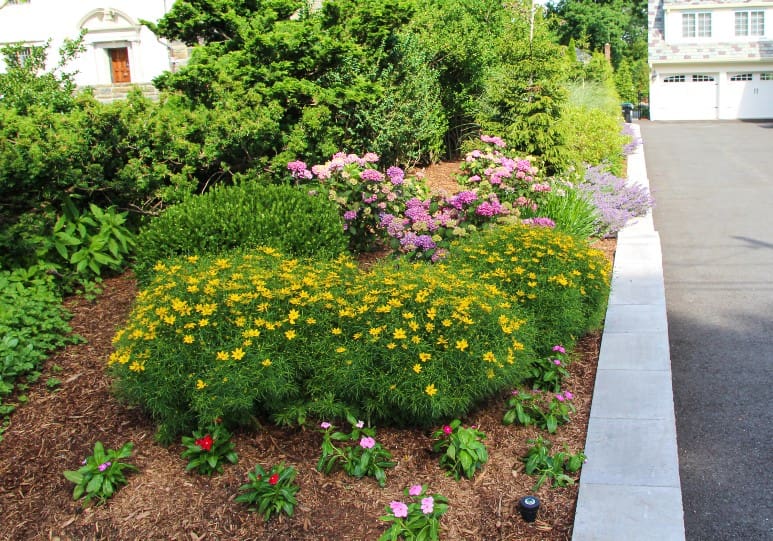
Mulch adds a protective layer to your plant beds with great benefits for plants and soil. Organic mulches decompose over time and need to be replaced, but provide excellent nutrients. Inorganic mulches are great for adding decorative elements or pathways to your landscape. There are many materials, textures and colors of mulch to be considered, and each have their benefits.
Other perks of mulching include:
- Protecting soil from erosion
- Retaining moisture in the soil
- Preventing weeds from growing
- Adding visual appeal to plant beds
- Maintaining soil temperatures to protect roots
- Cushioning walkways underfoot
Specific benefits depend on factors like what type of mulch you are using, and what time of year you are applying it, as well as soil quality and what sort of plants you are mulching around. There is also the question of what you want to achieve through mulching, from giving garden beds a facelift to stopping erosion or water loss in a troublesome area.
How to mulch over grass seed
If you’re overseeding an existing lawn, you generally don’t have to mulch over grass seeds because they are sheltered by the existing grass. But if you’re putting in a new lawn from seed, you’ll need something to protect the grass seed from drying out or blowing away before it germinates. This brings us to the question of how to mulch over grass seed.
You want to select the right material and spread a thin layer of mulch that will lock in moisture while still allowing seedlings to get sun exposure. You might use 1/4-inch of clean straw, sawdust, light peat moss or paper mulch. If you have a sloped lawn or are planting on a hill, a biodegradable seed mat or a layer of burlap over seeds is another option.
It’s critical you get it right if you want your new grass to grow evenly and healthily. It’s always a good idea to talk with your lawn care companyto help you with how to mulch over grass seed.
Natural lawn care services from Borst
Borst offers organic, all-natural lawn care servicesfor a safer way to keep your lawn healthy and looking its best.
Your yard is one of the most important assets of your home. That’s why it’s critical to hire a professional organic lawn care company to maintain it. Borst is committed to delivering outstanding organic lawn care so you can sit back, relax and watch the green grass grow.
Contact us today to speak to our skilled organic lawn care team, or to ask any of the questions you might have about how to mulch over grass, or beyond.
Give us a call at (201) 785-9400 or reach out online
FAQs
Q1: Can I apply mulch over an already established lawn?
A1: No — when you have an existing lawn and are just overseeding, mulch typically isn’t necessary, since the existing grass helps protect the seed and soil.
Q2: What mulch materials work best when planting new grass seed?
A2: The article recommends using clean straw, sawdust, light peat moss, or paper mulch in a thin layer (about ¼ inch) to protect seed from drying out or being blown away.
Q3: What special considerations are there for sloped lawns or hills?
A3: On slopes you might use a biodegradable seed mat or a layer of burlap over the seed to prevent erosion and keep your mulch/seed in place.
Q4: Why is the thickness of the mulch layer important?
A4: Because too much mulch will block sunlight and air, hindering seed germination and growth. Too thin, and the seed won’t benefit from moisture retention and protection. The article emphasizes spreading a “thin layer” so seedlings still get sun exposure.
Q5: Is hiring a professional worth it for this process?
A5: For homeowners in Bergen, Morris or Essex County, yes — working with a landscaping professional (like Borst Landscape & Design) ensures you select the right mulch material, apply proper depth, and integrate the work into a larger lawn care plan. The article mentions contacting their lawn care team for help with “how to mulch over grass seed.”
Q6: What are the benefits of mulching garden beds or around plants (versus overgrass)?
A6: Mulch in beds adds protective layers to soil, helps retain moisture, suppresses weeds, moderates temperature, and improves visual appeal.