
TL;DR:
Garden retaining wall ideas can help you manage slopes, prevent erosion, and create beautiful focal points in your landscape. This guide offers design inspiration and practical advice for choosing the right materials, styles, and layouts.
Need help with installation or design?Contact Borst Landscape & Designor call (201) 254-5732.
Creative and Functional Garden Retaining Wall Ideas for Sloped Yards, Garden Beds, and Outdoor Design Features
Whether you’re dealing with a sloped yard or simply want to define garden beds with structure, garden retaining wall ideas can solve functional issues while enhancing your landscape design. From rustic stone borders to sleek, modern concrete tiers, retaining walls come in a range of styles and materials suited for every type of home and terrain.
Incorporating retaining walls into your garden plan doesn’t just add dimension—it also supports soil stability, improves drainage, and expands usable planting space.
Looking to implement retaining walls in your Bergen County garden? Borst Landscape & Designoffers expert design-build solutions to suit your property. Call 201-254-5732 orreach out hereto learn more.
What Is a Garden Retaining Wall?
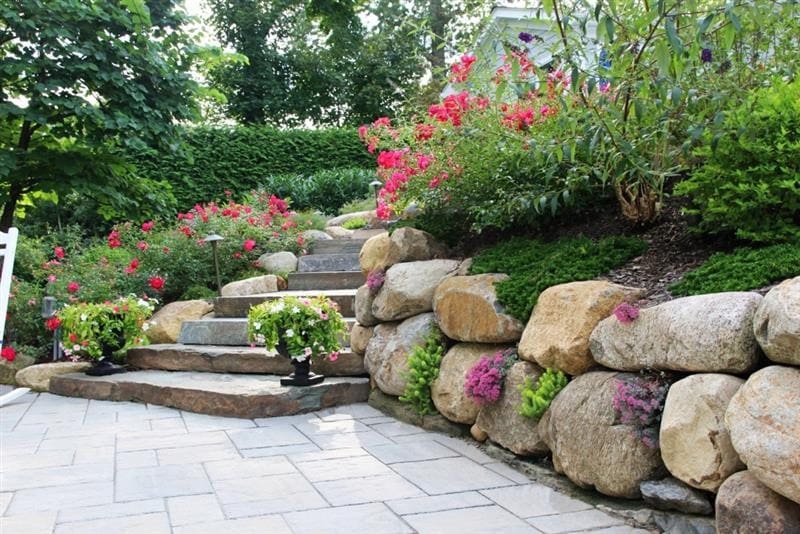
A garden retaining wall is a landscape structure designed to hold back soil, prevent erosion, and create flat surfaces on sloped land. They can be functional, decorative, or both—serving as planting borders, seat walls, or visual anchors in a multi-level yard.
They are typically made from durable, weather-resistant materials like natural stone, concrete blocks, brick, wood, or gabion (rock-filled cages).
Why Install a Garden Retaining Wall?
- Prevent Soil Erosion:Retaining walls help stabilize slopes and control runoff.
- Add Usable Space:Create level areas for patios, garden beds, or lawn.
- Improve Aesthetics:Frame flower beds and pathways with elegant borders.
- Support Drainage:Well-built walls can include weep holes or gravel backfill to encourage proper water flow.
- Boost Property Value:A thoughtfully designed retaining wall adds curb appeal and long-term landscape structure.
Top Garden Retaining Wall Ideas by Style and Material
1. Natural Stone Walls
For a timeless and earthy look, natural stone is a popular choice. Use fieldstone, bluestone, or limestone to create stacked or mortared walls. These blend beautifully with organic surroundings and pair well with garden plantings.
Best for:Rustic, traditional, or woodland garden styles
2. Concrete Block Retaining Walls
Interlocking concrete blocks are designed specifically for retaining walls and can be assembled without mortar. They offer strength, uniformity, and modern appeal.
Best for:Sloped yards needing strong support or contemporary landscapes
3. Timber Retaining Walls
Wood walls, often built with pressure-treated lumber or railroad ties, offer a warm, natural appearance. While not as long-lasting as stone or concrete, timber is affordable and works well for low walls.
Best for:Informal gardens or raised vegetable beds
4. Gabion Walls
Gabion baskets are wire cages filled with stones or gravel. They provide a unique industrial look and excellent drainage, making them ideal for erosion control.
Best for:Modern or coastal-inspired gardens
5. Brick Retaining Walls
Brick offers a classic and clean appearance, perfect for more formal gardens. It pairs well with traditional homes and can be used for low garden beds or seating walls.
Best for:Colonial or historic-style properties
Design Ideas to Elevate Your Garden Retaining Walls
Terraced Garden Walls
If your property has a steep slope, consider multiple short retaining walls that step down the terrain. This tiered design allows for more planting opportunities and a cascading visual effect.
Built-In Planters
Integrate planting pockets or recessed beds directly into the wall. These spaces can house colorful annuals, low-maintenance shrubs, or trailing vines to soften the hardscape.
Retaining Wall with Seating
Add functionality by designing your retaining wall to double as seating. A wider top layer made of smooth stone or pavers can provide a perfect garden bench.
Water Features
Embed a water feature—like a cascading fountain—into your retaining wall for both sound and visual interest. This works especially well on multi-level walls.
Lighting Accents
Incorporate low-voltage LED lights into your retaining wall design. Downlighting from the wall can illuminate pathways or accent plantings.
Choosing the Right Material for Your Yard
When selecting the best material for your garden retaining wall, consider the following:
- Soil and slope conditions:Heavy-duty materials like concrete or stone are best for steep or unstable slopes.
- Drainage needs:Make sure the wall design includes proper drainage, especially in clay-heavy soil.
- Aesthetic goals:Match materials to your home’s architecture and existing hardscape features.
- Budget:Timber is often the most cost-effective, while natural stone is the most durable and premium.
Installation Tips for Long-Lasting Retaining Walls
- Start with a solid foundation:Excavate and level a base layer using compacted gravel or stone dust.
- Use drainage solutions:Backfill with gravel and add weep holes or drainage pipe if needed.
- Avoid stacking too high:Walls over 3–4 feet often require engineering or permitting. Check local codes.
- Account for freeze-thaw cycles:In cold climates, choose materials and construction methods that can handle seasonal expansion and contraction.
- Hire a professional for complex walls:While DIY is possible for low, simple walls, anything structural or multi-tiered should involve expert design and construction.
Garden Retaining Wall Ideas for a Strong and Stylish Landscape
Garden retaining wall ideas offer a blend of structure, beauty, and practicality. Whether you’re aiming to tame a slope, define planting beds, or add stylish dimension to your yard, the right retaining wall can enhance your landscape for years to come.
For expert help designing and building your garden retaining walls, call Borst at 201-254-5732 orcontact us online.
FAQs
What is the best material for a garden retaining wall?
Natural stone, concrete blocks, and treated timber are all popular choices. Your ideal material depends on your style, slope conditions, and budget.
How high can I build a retaining wall without engineering?
Most municipalities allow walls up to 3–4 feet without engineering, but always check local building codes before construction.
Does a retaining wall need drainage?
Yes. Without proper drainage, water buildup behind the wall can cause pressure, cracks, or failure. Use gravel backfill and weep holes or drainage pipes.
Can I build a retaining wall myself?
DIY is possible for short, simple walls using interlocking blocks or timber. For higher or more complex designs, professional installation is recommended.
How long do retaining walls last?
With proper installation and materials, stone or concrete walls can last 50+ years. Timber walls typically last 10–20 years, depending on conditions.
Well-designed retaining walls offer both beauty and backbone to your outdoor space.
To bring your garden vision to life, call Borst at 201-254-5732 orcontact us here.